Stairs are one of the few parts of a wood-framed building that most crews still build by hand on site. Every stringer gets laid out, cut, and checked in the field, often while the rest of the framing crew waits for access to the next level. At CAC Wall Panels, we build stairways the same way we build our wall panels and trusses: engineered ahead of time and manufactured at our facilities in Indiana, then delivered ready to set.
What is a pre-manufactured stairway?
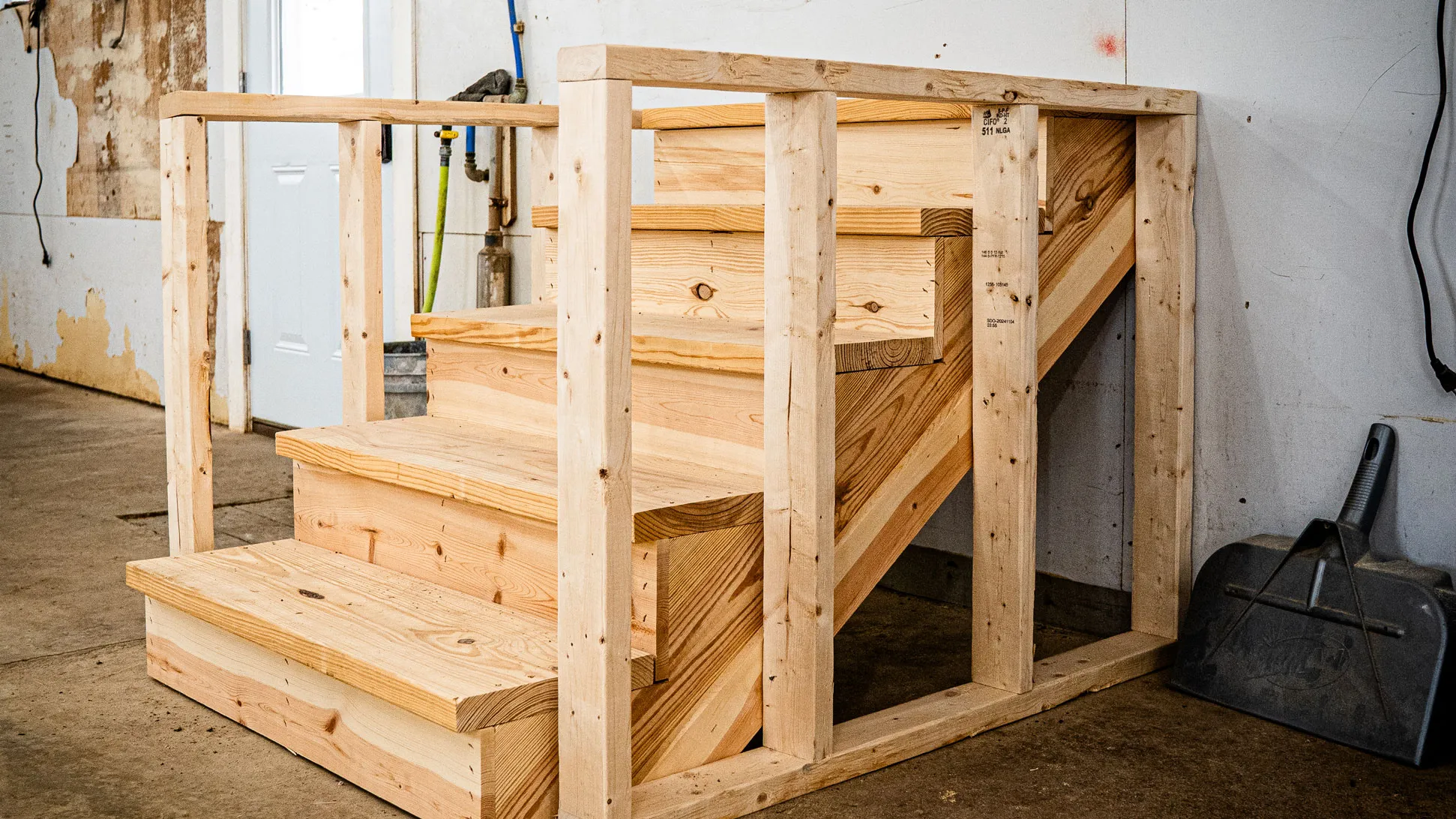
A pre-manufactured stairway is a stair system that is designed and built in a production facility before it reaches the jobsite. Instead of cutting stringers on site, the crew receives a stairway built to the project's exact rise and run, ready for installation. CAC Wall Panels builds stairway systems from Southern Yellow Pine and LVL (laminated veneer lumber), and each one is engineered to the specifications of the project.
Why Stairs Are Hard to Get Right in the Field
A stair has very little room for error. The unit rise and unit run need to stay consistent from the bottom step to the top, and the total rise has to match the actual distance between finished floors. When stringers are cut by hand, small differences add up, and a stair that is off by a fraction of an inch can mean rework, a failed inspection, or a callback after the building is finished.
Field-built stairs also take time from skilled carpenters at a point in the schedule when the crew is trying to move upward. On multifamily and assisted living projects, where the same stair may repeat across several buildings or floors, that time adds up quickly.
How CAC Builds Stairways
Our stairways start with the project drawings. The team works from the architectural plans to engineer each stair for the finished floor heights and layout of the building, then the stair is built in a controlled environment where every cut can be measured and checked.
- Materials: Southern Yellow Pine and LVL, chosen for strength and consistency.
- Configurations: Straight runs up to 20 feet, along with sawtooth designs for layouts where space is tight.
- Inspection: Stairways are graded and inspected before they leave our facility.
- Delivery: Stairs arrive roughed in, so the builder keeps control of the final finish.

What Changes on the Jobsite
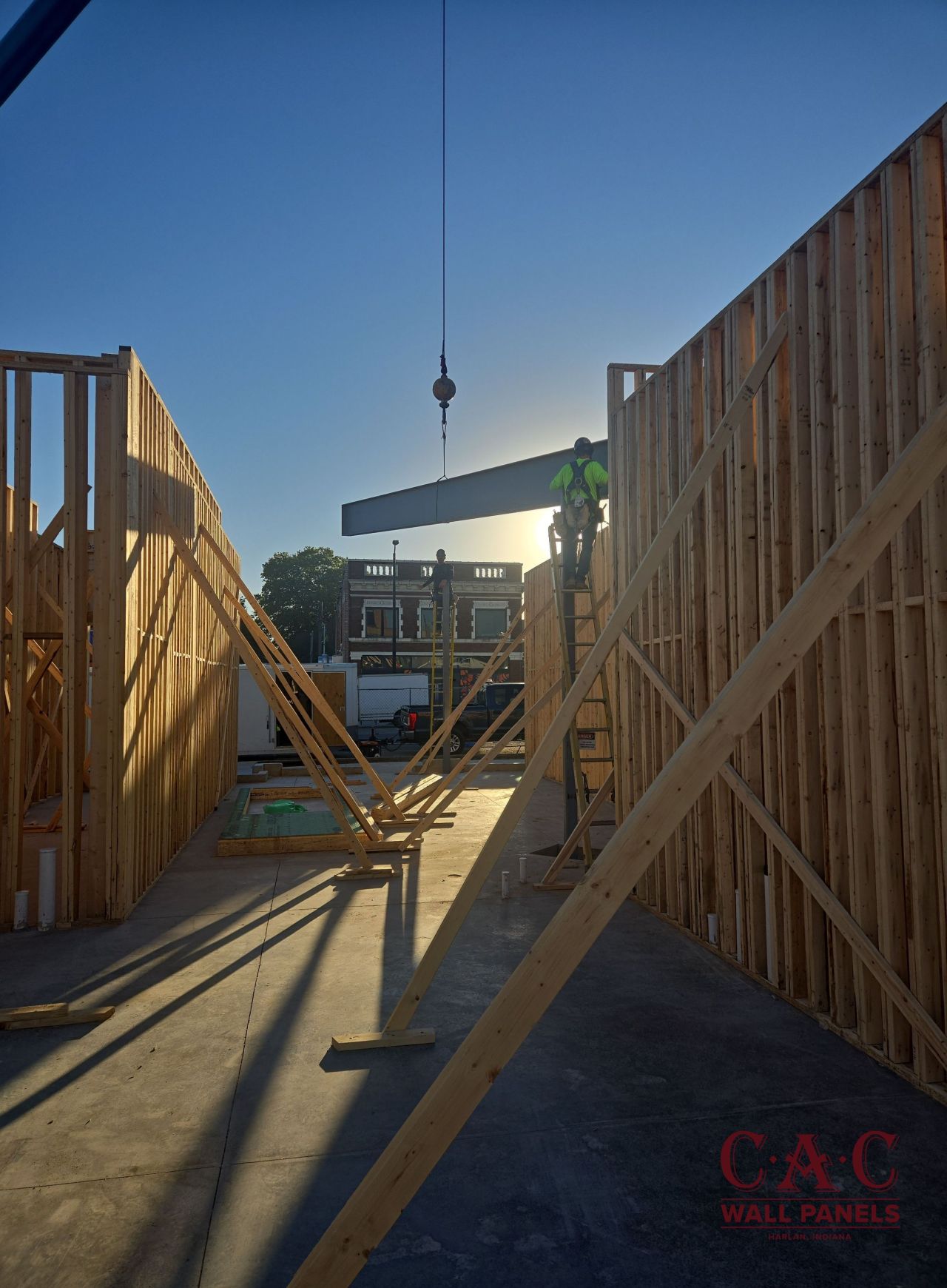
When a stairway shows up built and inspected, the crew sets it in place and keeps working. Cutting and lumber waste on site go down, and carpenters spend their hours on the rest of the frame.
Stairs also give crews safer access between levels earlier in the project. On a building where wall panels and floor trusses are already arriving from our plant, a stairway built to the same drawings fits the framing it is going into.
Stairways as Part of the Full Framing Package
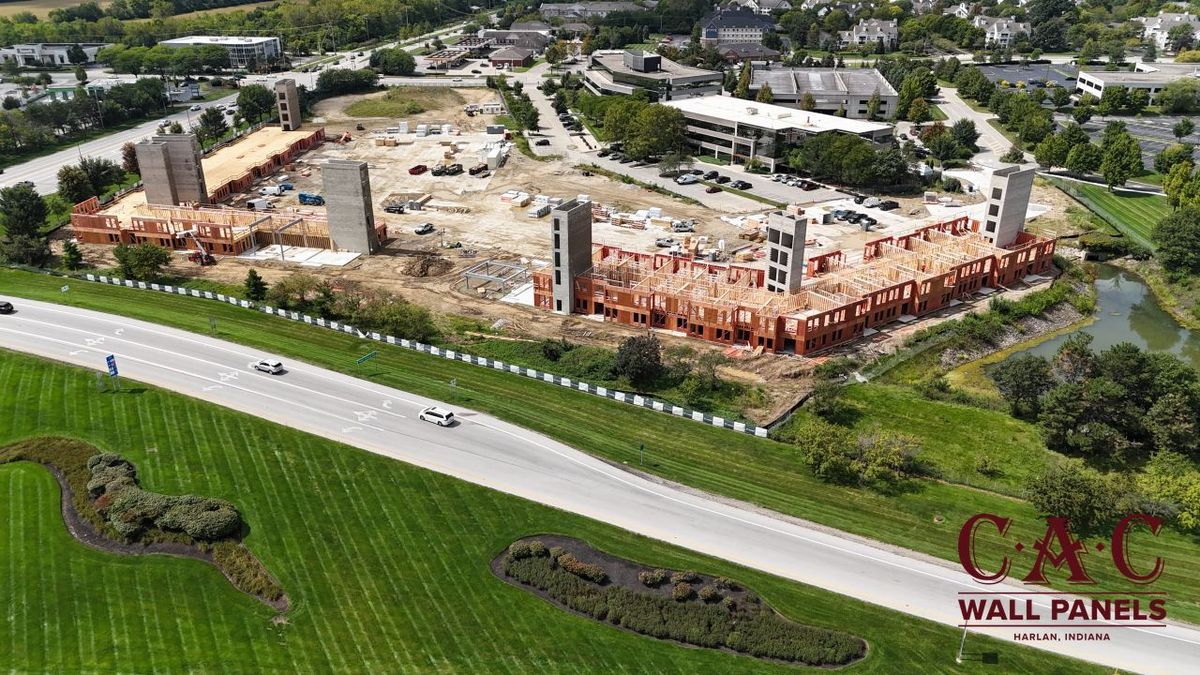
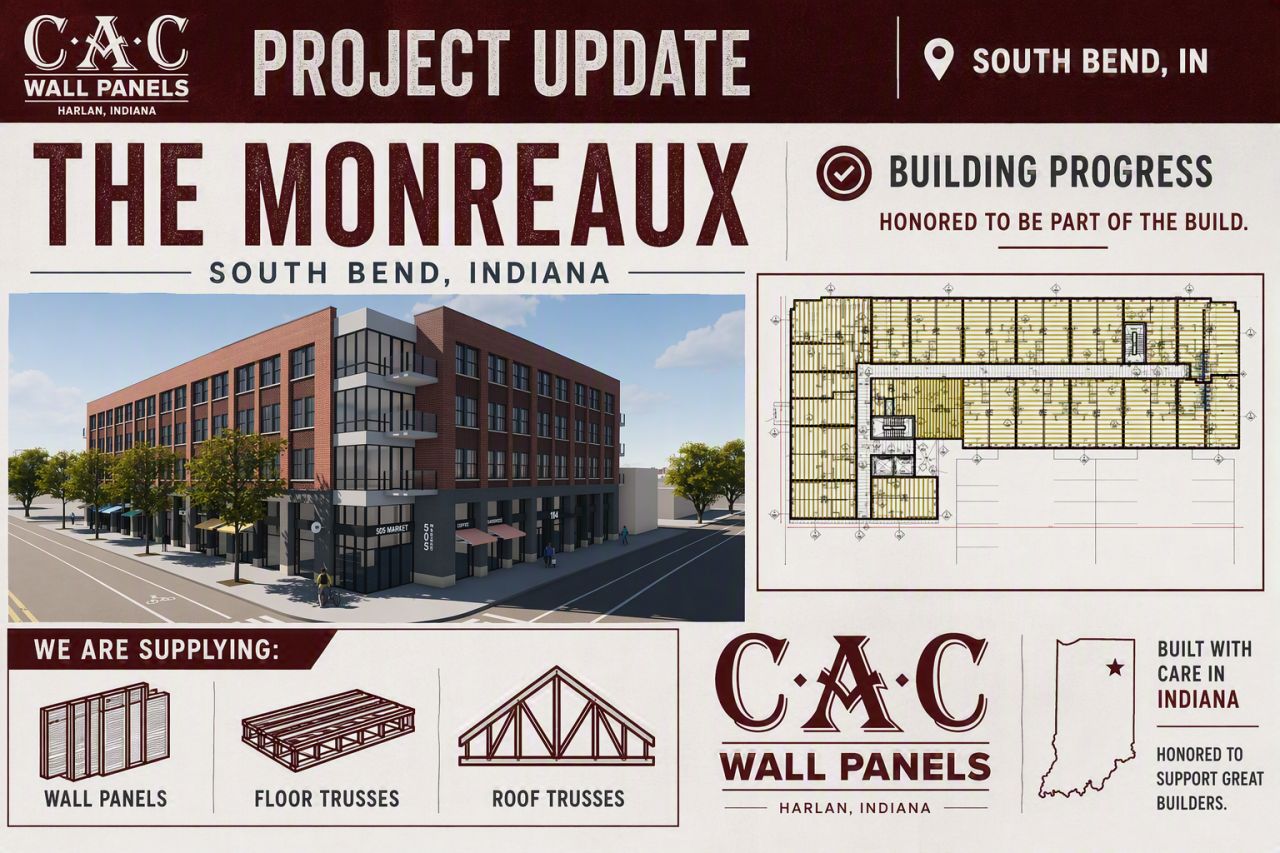
Many of our projects include more than one component. On The Landing Exchange in Fort Wayne, CAC Wall Panels is supplying wall panels, floor trusses, roof trusses, and stairs. When one supplier engineers the whole package, the stair openings, floor heights, and wall layouts are coordinated together during design.
We build stairways for residential, multifamily, assisted living, and commercial projects. You can find more detail on our stairways page, or contact our team to talk through your next project.
Frequently Asked Questions
What materials does CAC Wall Panels use for stairways? CAC builds stairway systems from Southern Yellow Pine and LVL (laminated veneer lumber).
How long can a CAC stairway be? CAC builds straight-run stairways up to 20 feet, as well as sawtooth designs for constrained layouts.
Are CAC stairways inspected before delivery? Yes. Each stairway is graded and inspected at CAC's facility before it ships.
Do CAC stairways arrive finished? No. Stairways are delivered roughed in, so the builder can choose the final finish.
Can stairways be ordered with wall panels and trusses? Yes. CAC Wall Panels supplies stairways alongside wall panels, floor trusses, and roof trusses, so all components are engineered from the same project drawings.
Where is CAC Wall Panels located? CAC Wall Panels has production facilities in Harlan and Butler, Indiana.